WESTMINSTER – When Miho Tanaka, manager of FRCC Westminster’s Wolf Café and Coffee Den, wakes up each morning, she checks her emails and texts to see who will not be available to serve a shift at either location that day. By 7:40 AM, she arrives at the Westminster campus to ready both places just before they’re open for the general student population. She makes sure there are enough supplies, food, and student workers to help keep the places running smoothly, and she lends a hand whenever there is a shortage at either location.

But behind the scenes, she has additional tasks such as “ordering supplies … And I receive them, sort them, store and consolidate, manage all those products,” she told The Front Page. She also does this so that she can “prepare space for their arrival and make sure to not miss the deadline for placing orders.” On top of this, she meets once a week in person with her supervisor – with many more remote communications – and also meets with representatives for the vendors that provide products for both stores. Tanaka purchases items and conducts invoices for these purchased products as well.
Tanaka certainly has the experience to hold a position like what she has at the Wolf Café and Coffee Den: she has had chef experience for over 20 years, especially “in the back of the house” and as a sushi chef which dispensed both cooking and customer service skills to her. In particular, the customer service skills she has “still helps [me] to be good at what I do right now.”
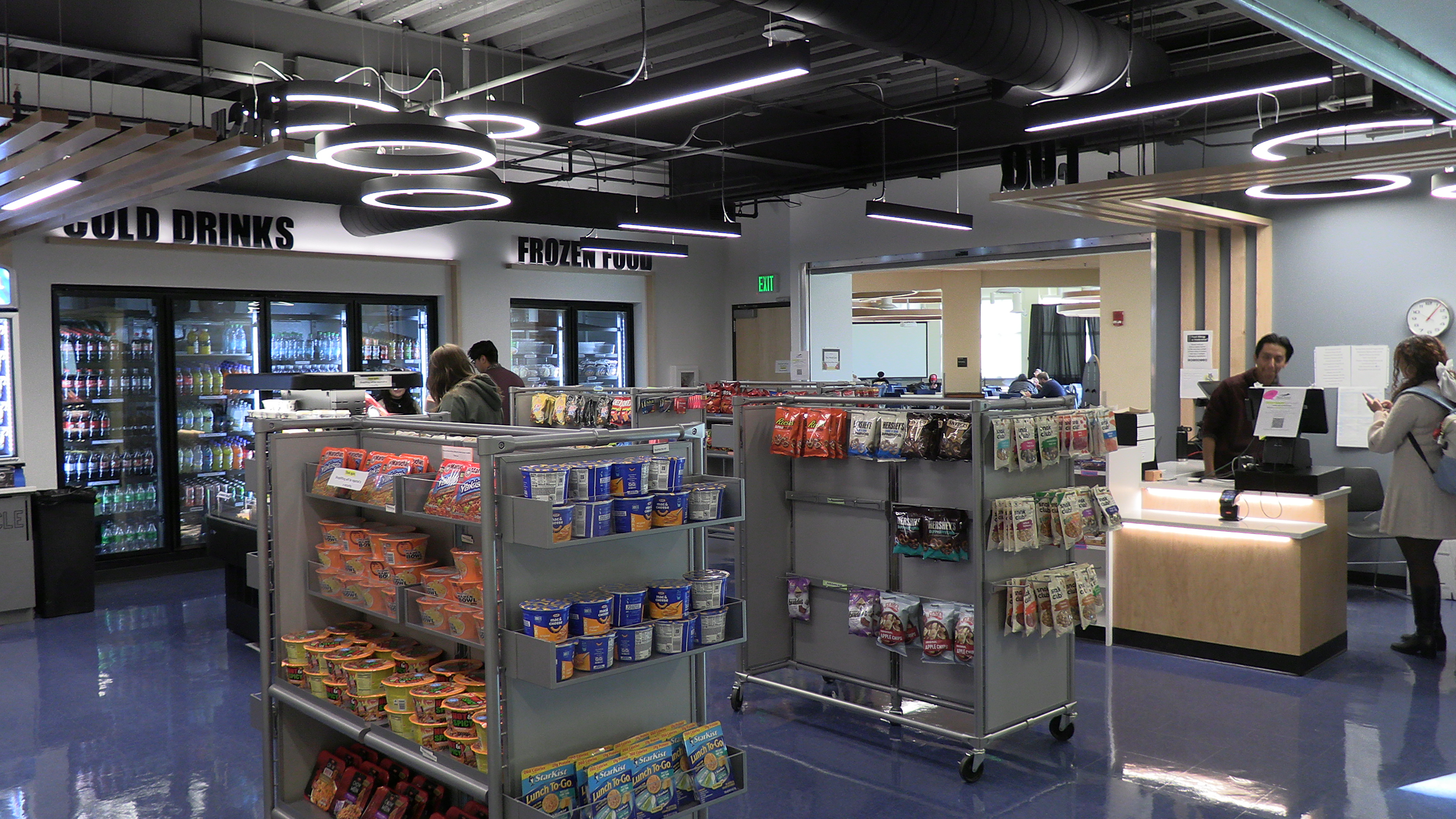
Tanaka, who had been hired as a manager of the then-unbuilt Café and Den right off the bat, reflected on the first years of her position. She stated that although she had been hired to manage the “Grab & Go” operation that the new Café is considered to be, the old cafeteria was still there. “After I started here, they demolished the whole building, the part of that kitchen. Then it took a good eight months, I would say, to build this whole Café,” she said.
“And during [that] time we operated everything at the Coffee Den, so we sold all the items here, served the coffee. We could not cook any warm food as we do right now,” she continued.

Gloria Perez, a full time assistant manager for the Coffee Den who started working this semester, specifically oversees most of the daily operations of said Den now, though Tanaka still supervises her as “she’s still new.” Perez’s routine is similar to Tanaka’s, except it is much more locally based than hers. She opens the Den, supervises the student workers, brews the coffee, manages the teas, and sees to it that everything is stocked and ready for customers. “[It’s] just a lot of customer service,” Perez concluded.
Perez decided to work for the Den as she had had a similar position beforehand which she enjoyed. “I’m real social, so that was a perfect aspect for me to be able to kind of socialize and get to know people here specifically. It just seemed like a very good opportunity,” she explained.
Compared to her old position, however, Gloria mentioned that “[here] it’s definitely more steady and a lot calmer. And definitely I express it as a stress-free environment compared to a Starbucks or something like that.”
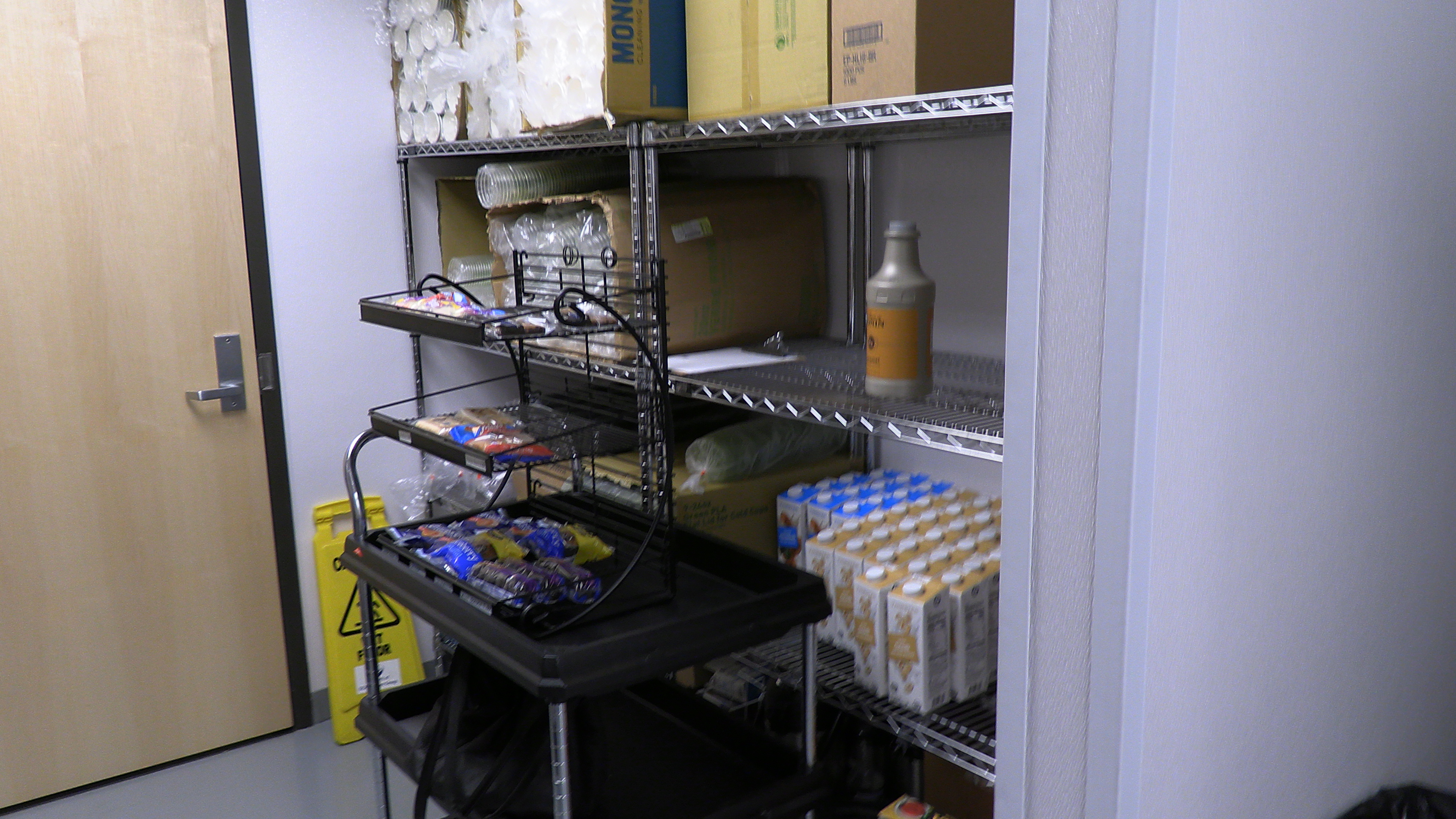
Miho Tanaka also checks with the staff to see how the day will run and what tasks each of her staff, mostly student workers, have to do. She reflected on the importance of these workers and her respect of them, saying that “Without them… [it is] impossible to run both places, since we’re [me and Gloria] just two of us. So we depend on them big time. And I make sure the schedules work for all of them.”
“[I] always tell them it’s okay if you have to miss [a] shift. I understand. I want you to focus on school first,” she concluded.
Judah Perez, one of the Wolf Cafe’s many cashiers, is one such student worker.
His duties as a cashier at the Wolf Café include normal cashier duties: managing the cash registers, taking customers’ money, stocking and restocking, and cleaning the Café itself. How his hours are decided depend on his class schedule and the hours of the Café itself. Gloria Perez similarly echoed this, stating that Miho conducts the interviews during hiring.
Judah holds a positive opinion of his position at the Café. “I really like my job. I like the hours. I like that I get to speak with people. Usually when it’s not busy, I can interact with them. I also like working with my coworkers.” He also mentioned that he gets to take some of the hot food which does not sell each day with him, either for himself or to give to people. Of the fresh food he has tried, he said “most of it’s pretty good,” naming the old chicken tender recipe, the popcorn chicken, and the egg rolls as examples, among others.
While Perez had intended to land a multimedia job at the campus initially, it did not work out in his favor. As a result of this, his previous experience as a cashier, and because he “like[d] the manager,” he decided to work at the Café instead.
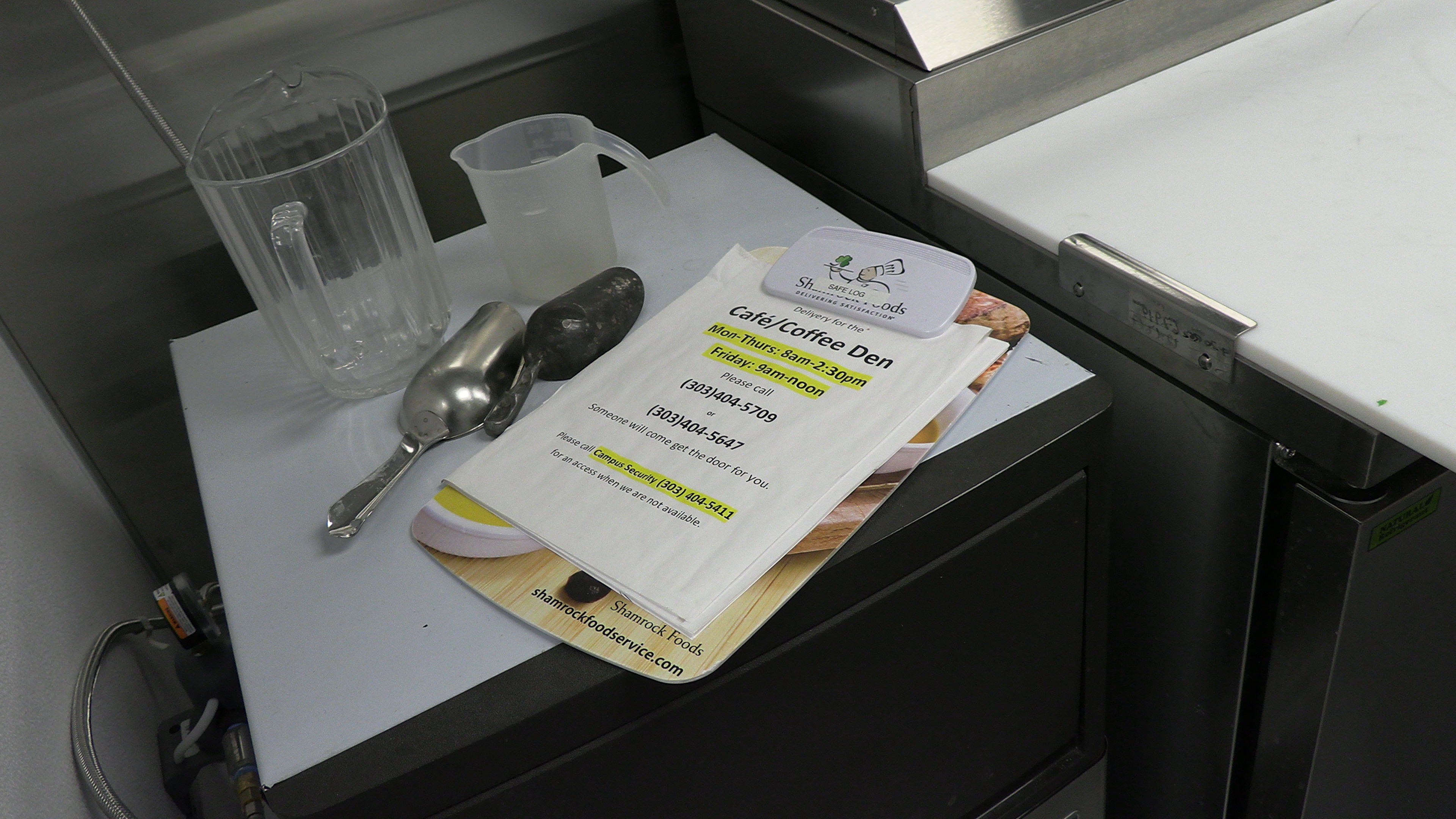
While Tanaka trains new student workers, students like Perez sometimes help out with that as part of the daily routine as well. He explained that this training consists of shadowing, “so the new person would be [physically] behind anyone working there.” The manager has the more experienced cashiers explain and perform duties as a cashier to the hiree, and eventually the hiree will attend to the register “once they feel comfortable … [and] especially when it’s not busy,” according to Perez.
As with any job, there are unexpected occurrences with it. One such occurrence was how Perez thinks the people are overall “a lot nicer than other fast food restaurants.” He also did not expect to have to give people directions on campus, considering the Wolf Café is located by Entrance 2 of the Westminster Campus; however, he “liked it. I thought it was pretty cool.”
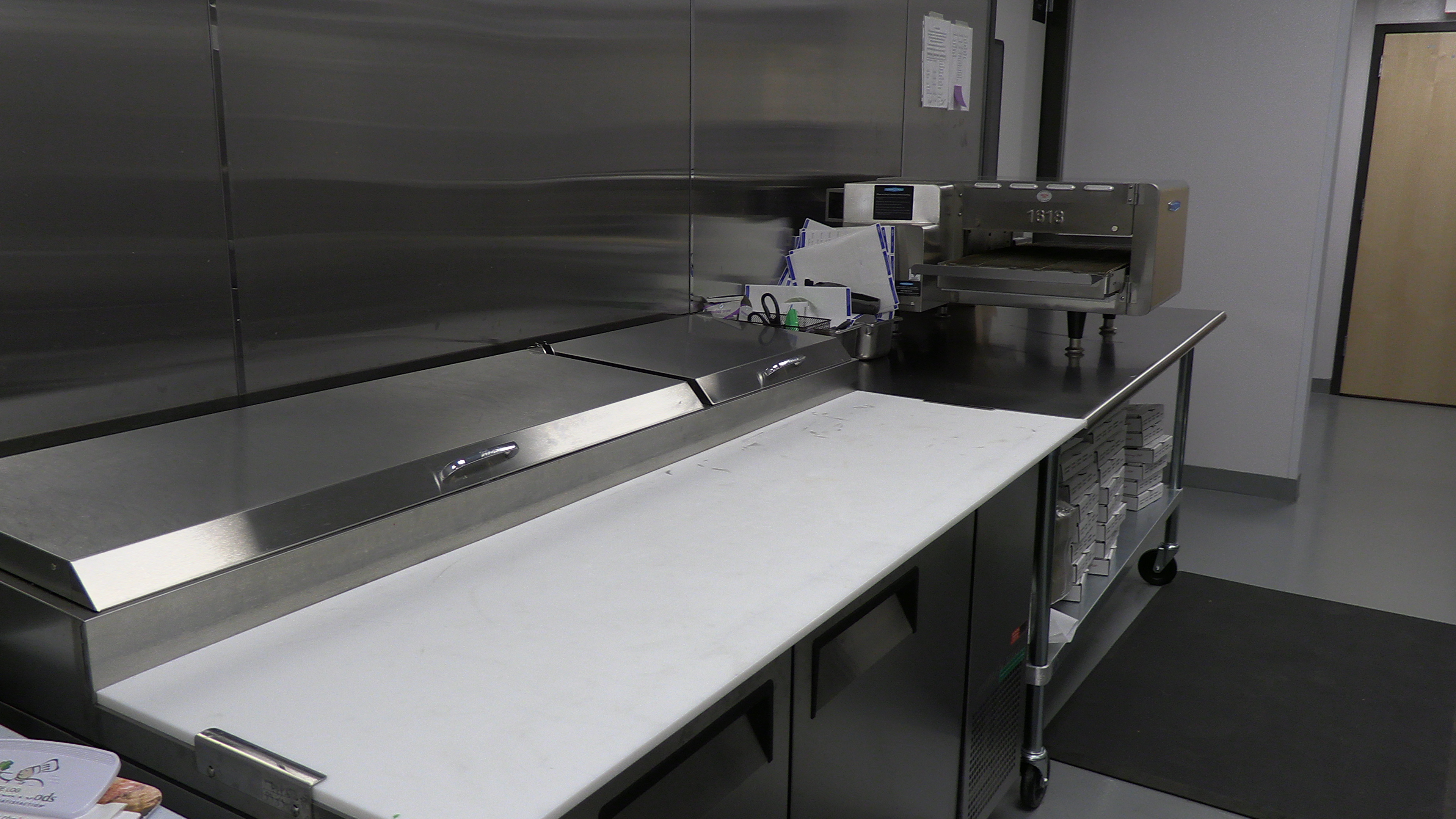
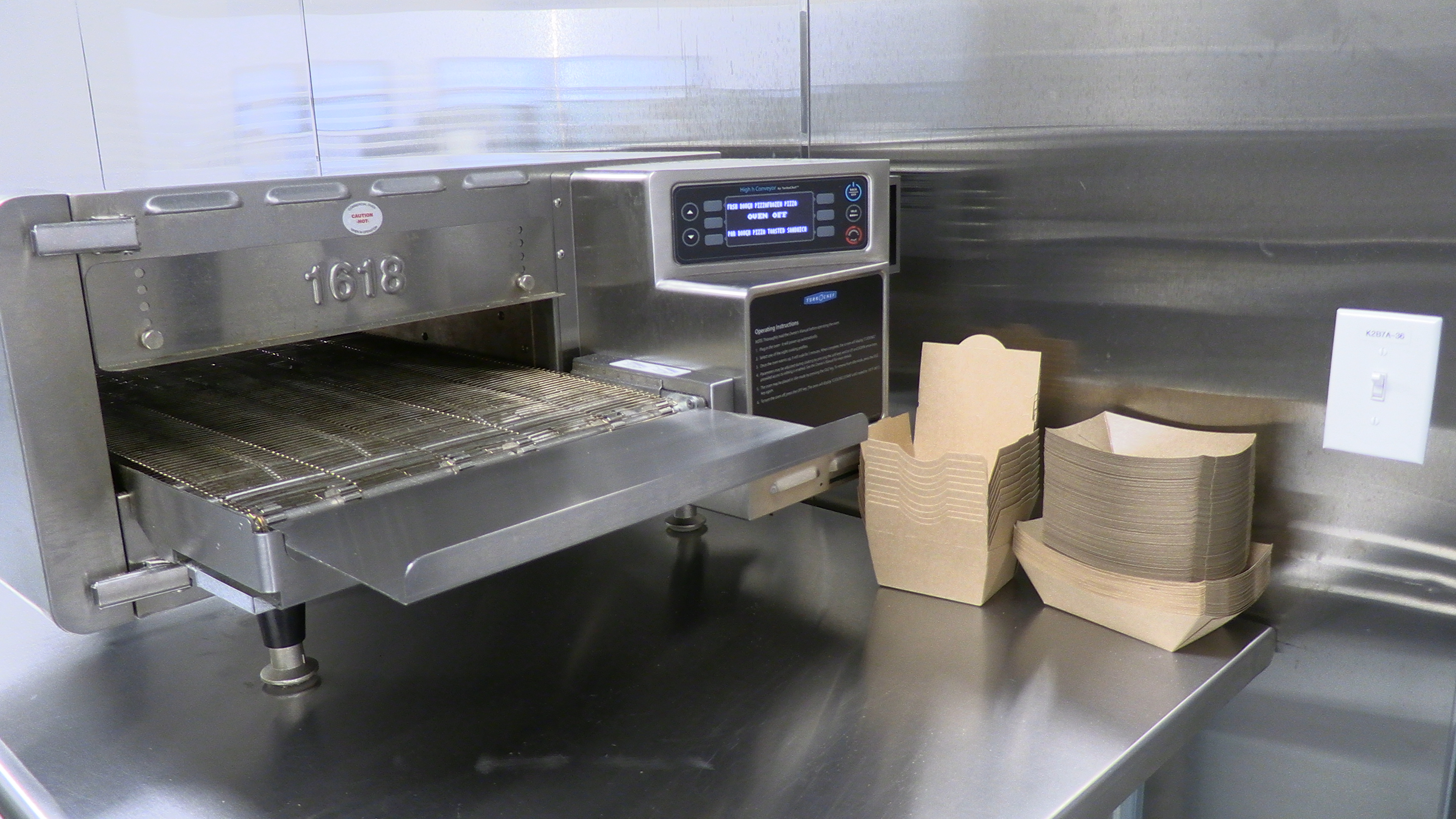
Despite the “Grab & Go” convenience-store model the Café takes on, there is only one cooking device in the location’s kitchen: a “Speedoven”, as Tanaka calls it, which is simply a Turbo Chef oven.
“It runs cold food and they cook everything in five minutes,” she summarized. Most of the fresh food that comes into the Wolf Café, such as the pizza and chicken tenders, come frozen from the vendors which the Café has a contract with. “We defrost them the night before and we turn them up and then we run it the next day … So a lot of things we buy are already cooked. We are more like heating it up and putting it together,” she added.
For the fall 2024 semester, Tanaka has been particularly focused upon expanding the menu of fresh food available to all of the Café’s customers. Food such as pork bao, tater tots, wings, egg rolls, burgers, and vegetarian nuggets and burgers have all been added to the menu this semester, starting as a trial to see if it will sell well. If new items end up not selling well, she does not repurchase the same items again.
Fresh food is discarded or taken home by the workers after each day. For items that are kept on the shelf for a lengthy period of time due to their not selling, non-perishables are kept on the shelf until their expiration date. For frozen food, “we sell them in the fridge temp for a week and dispose after that,” she explained.
Tanaka has also attempted to lend an ear to any feedback she receives on these items. Specifically, the vegetarian options were added because of “one student who was asking me [about] vegetarian options. So I just started to just to please him and he’ll give me feedback. So like, OK, that sucked, that wasn’t good. … Like ‘Thanks. I appreciate your feedback.’” Among other requested items by students include boba tea, which have not been implemented yet because of the individual pieces not coming together, and more pizza toppings, like vegetables.
A new addition to the Coffee Den this semester has been a monthly special menu of drinks, exclusive to that month. Implemented by Tanaka’s supervisor (and partially as a challenge for Gloria Perez), it is a tactic that somewhat copies other coffee shops, such as Starbucks and their various fall season drinks. “A lot of people come to the Coffee Den and they do drink coffee, but they don’t know what they want. So often times they ask for recommendations, and then those are easy recommendations for us to make as well when there’s a special. If it says “special”, people are more interested, so we enjoy the reaction from them and it’s been great,” Tanaka reflected.
If there is a shortage of supplies at any point during the work day, some local workarounds are made, such as a grocery store run for milk to make drinks at the Coffee Den with or to a bank for change. This also comprises part of Miho’s daily routine.
Although the menu has been at parts greatly expanded this semester, there are some items which the Café and Den cannot carry. Some of these items, such as Red Bulls, cannot be carried “because it’s not a Coke brand.” In addition, not all businesses are able to sell their products at the Wolf Café or Coffee Den as Tanaka explicated that “[we] have to have accounts [with these vendors]. We have to have purchase order – PO. We have to have all the paperwork signed up for them to be able to sell for us. And we [the Café] don’t pay them. I process payments and our accountant pays them the cheque.”
If this is the case for some products, what can the Wolf Café and Coffee Den carry? What vendors are approved to sell products to these stores?
The five vendors include the Coca-Cola Company, Frito-Lay, the Luna Gourmet Coffee & Tea Company – which provides the beans for Coffee Den drinks, Vistar, and US Foods. ImageFIRST, who also provides a similar service for Student Life as they do for the Café and Coffee Den, provides linen material, such as towels.
Some students think the Café is overpriced, even if the establishment is consistently popular among the student population. Although some items are popular (such as the F’real milkshakes during the warmer times of the year at the Café or the caramel macchiato at the Den), Judah Perez’s observations of student opinion of the Café reflected exactly that, and he also observed that new items, like the vegetarian options, receive mixed reviews.
Tanaka responded simply to the reception of prices: “We are actually not here to make a profit.”

“We just price it the way our supervisors suggest,” she explained. “We actually do pay rent. We pay for things that go [to] waste. A lot of the things cost enough for us to not be profitable.” Tanaka clarified that the two places are open to serve the community: because it “serves students’ needs, because it serves staff’s needs … Our goal is to minimize the loss.” This would be in line with why the old cafeteria closed in the first place according to her: it simply lost too much money.
With the Café operating at a seemingly impossible-to-circumvent loss, there is always the possibility of it and the Coffee Den closing permanently. “I wish I knew [whether or not they will close in the future], and I certainly hope not. But I don’t know. … But I don’t think we’re there yet. It can come. Absolutely. So five years from now, I may not have my job,” Tanaka commented.
In spite of this, the Café and Den have been more successful over the past few years. While Tanaka does say some of this is due to the smaller space that the Café takes up and thus brings about a lower rent price, she also added that “[Compared to when] we first opened the Wolf Café, it’s definitely stabilized sales to the point where it’s way better than it was. So has [the] Coffee Den. Coffee Den’s definitely shown [a] significant[ly] higher volume than a year ago, two years ago.”
Also in spite of the time break change this semester, the change has not affected sales, as lunchtime is still the most popular time for purchases. For the Coffee Den, “9 am … and 10:45 am during the break between classes” are the most popular times, said Tanaka.
However, a lack of student presence on campus on Fridays is also why only the Coffee Den is open on that day, and why the Café is not. Coffee Den sales on Friday are about one-fifth, according to Tanaka, the amount of sales conducted on a regular school day.
Even when the day is over for either location, Tanaka’s day is not yet done. She “check[s] to make sure that day went smoothly on both locations and do end of the day reports, count all the drawers from both locations and do the cash out” before making sure the Wolf Café and Coffee Den are ready again for their next day of operation.
Like Gloria Perez and Judah Perez, Miho Tanaka enjoys her job as Café and Den manager. “I get to meet a lot of people, including students, staff, people who also come in for visits, all ages. I enjoy talking to them. I enjoy working with students. Work study students are a good source of knowing what’s going on [around campus] … Every year it just gets better for me.”

