This year marks the 30th season for several original MLS clubs, and that includes your Colorado Rapids.
From humble beginnings and early playoff surprises, to lifting the MLS Cup in 2010, to the frustrating downturn of the late 2010s, and finally to today’s mix of optimism and uncertainty, we’ll explore how the Rapids became the club they are now.
We’ll also highlight the club’s growing relationship with local students, and share an inside look from Fan Engagement Specialist Fernando Varela on how the Rapids are trying to build a stronger, more connected soccer community in Colorado.
THE BEGINNING: MLS IS BORN
The year is 1996. Major League Soccer is officially launching after the United States’ hosting of the 1994 FIFA World Cup had rekindled national interest in the game. Ten clubs are set to compete in this first-ever MLS season:
- Columbus Crew
- D.C. United
- New England Revolution
- NY/NJ MetroStars
- Tampa Bay Mutiny
- Colorado Rapids
- Dallas Burn
- Kansas City Wiz
- LA Galaxy
- San Jose Clash
At number six: your Colorado Rapids.
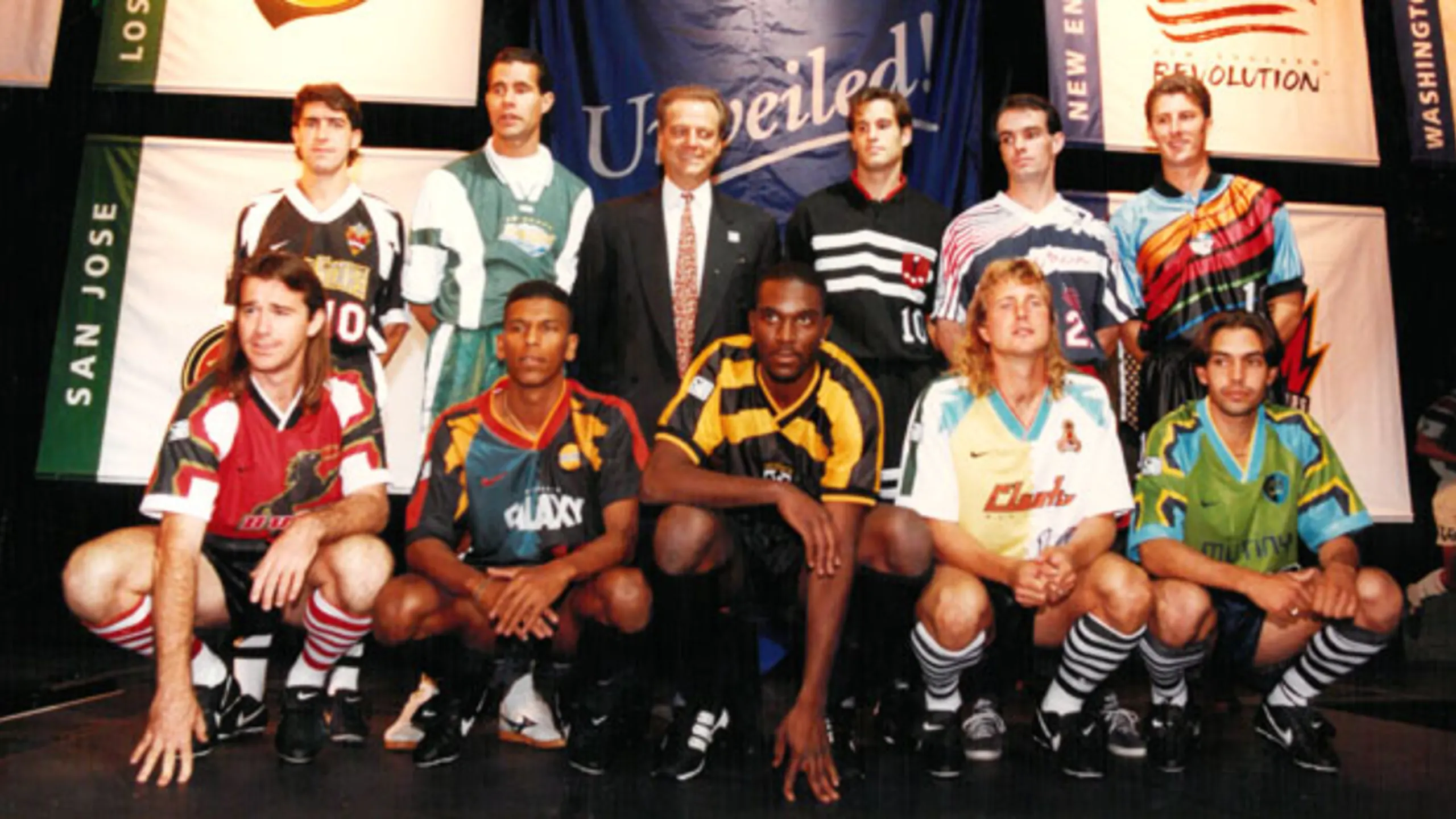
The club had been founded a year earlier, in 1995, as part of the Anschutz Corporation. It would later become one of the cornerstone sports franchises in the AEG portfolio. Colorado entered MLS with a mission, not just to be competitive, but to give the state a permanent professional soccer presence after decades of fleeting teams and failed leagues.
Why Colorado? A State Primed for Soccer
Colorado wasn’t starting from scratch. For decades, the state had hosted various soccer clubs that laid the foundation for a passionate fanbase:
- Denver Dynamos (NASL, 1974–75) – a short-lived effort to bring top-level soccer to Denver.
- Colorado Comets – a semi-pro club that bounced between leagues before folding in 1997.
- Colorado Caribous (NASL, 1978) – one season, infamous fringe-covered jerseys, then a move to Atlanta.
- Colorado Foxes (APSL/A-League, 1990–97) – a rare pre-Rapids success story, winning multiple APSL championships before folding when MLS became the dominant league.
These teams didn’t survive, but they created a soccer culture and appetite. When MLS announced the Rapids, it felt like Colorado was finally getting the club it had been waiting for.
Building the Club: Early Years (1996-1999)
The Rapids’ first-ever match came on April 13, 1996, a 3–0 loss to the Kansas City Wiz at Arrowhead Stadium. But just a week later, Mile High Stadium hosted the club’s first home match, a thrilling 3–1 win over Dallas Burn, highlighted by two goals from USMNT star Marcelo Balboa.
The inaugural season was rough: 11 wins, 21 losses, no draws (this was the era before ties in MLS). The Rapids finished last in the West and missed the playoffs.
In 1997, Colorado finished 14–18–0 and squeaked into the playoffs as the lowest seed. No one expected much. Yet the Rapids stunned Kansas City in the semifinals and Dallas in the conference final to reach their first MLS Cup Final. They lost 2–1 to D.C. United, but the underdog run set the tone: this was a club capable of surprises.
The rest of the late ‘90s saw more playoff appearances but no trophies. Still, a foundation was being laid.

2010: The Year of Glory
The road from the ’90s to 2010 was uneven, seasons of promise followed by disappointment, coaching changes, roster turnover, and a brand new stadium just for the Rapids. But by 2010, the Rapids had a balanced squad under head coach Gary Smith:
- Pablo Mastroeni – the heart and soul, captain, and midfield enforcer.
- Conor Casey – a bruising forward with a nose for big goals.
- Omar Cummings – a speedy striker with a lethal shot.
- Matt Pickens – a steady hand in goal.
- Drew Moor – a brick wall in defense.
The Rapids didn’t dominate the regular season (12–8–10), but they were tough, physical, and built for knockout soccer.
This was the Playoff Path. In the Conference Semifinals, the Rapids moved past the Columbus Crew on penalties after a tense 2–2 aggregate draw. In the conference final, they defeated the San Jose Earthquakes 1–0, with Kosuke Kimura scoring the decisive goal at Dick’s Sporting Goods Park. It was now time for the final.
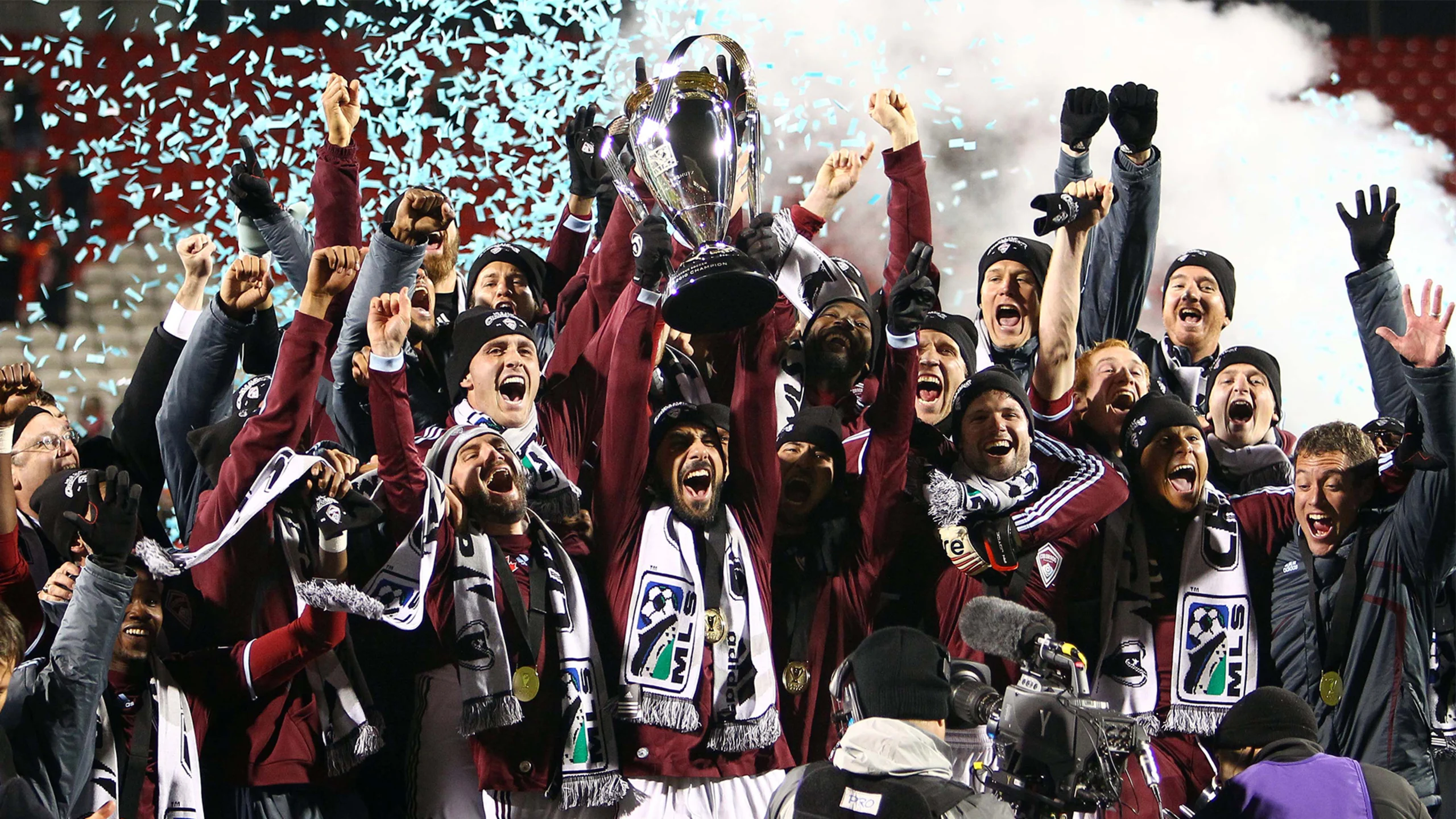
In the MLS Cup Final against FC Dallas, the Rapids went down 1–0 to a David Ferreira strike. Conor Casey tied it with a scrappy goal in the 57th minute. In extra time, Macoumba Kandji’s determined run forced an own goal to make it 2–1, and the Rapids held on.
That night in Toronto, Pablo Mastroeni lifted the first MLS Cup in club history. It remains the defining moment of the Rapids’ 30 years.
The Struggle Years: 2015-2019
Post-2010, the Rapids never fully built on their championship success. There were playoff appearances — notably in 2016, when they reached the Western Conference Final — but no sustained dominance.
By 2018, they had slipped into MLS’s lower tier. Defensive breakdowns, lack of attacking punch, and frequent managerial changes kept the club from finding rhythm. Fan frustration grew, and attendance dipped. The Rapids felt adrift, with little national attention.
2025: A Season of Promise… and Uncertainty

The Rapids entered their 30th season with fresh optimism under head coach Chris Armas. The squad blended hungry young players with experienced leaders, and early-season form suggested they could push for a high playoff seed. The attack was spearheaded by their dynamic central attacking midfielder, a creative engine who could split defenses with one pass, and their clinical striker, whose goalscoring touch had carried them through tight matches.
For the first few months, the Rapids looked sharp: high-press energy, fluid movement, and a revitalized fan atmosphere at Dick’s Sporting Goods Park. Center attacking midfielder Đorđe Mihailović led the league in key passes by April, and striker Rafael Navarro had already hit 9 goals on the season..
But the summer brought turbulence. Whispers began to circulate: European clubs and MLS clubs were scouting Mihailović, and a high-profile Brazilian team was interested in Navarro. The rumors gained traction after the club’s form dipped in July, with three consecutive losses and a noticeable drop in attacking fluidity. It wasn’t until the 4th of August that the rumors were said to be true. Đorđe Mihailović was set to leave and join Toronto, which is going to be a record-breaking sale for $8 million. It is still unknown what has driven him to leave the club after only being here for a season and a half. Navarro, it is also unclear if he is also going to leave the club after the Rapids have rejected 3 bids worth 7 million for him from Club Fluminense.
Burgundy Wave, the Rapids fan newsletter reported, “If $8 million is an overpay for Djordje Mihailović, then so is $7 mill for Rafael Navarro. It would be an incredible return on investment. But Colorado Rapids fans would riot August 16 if it happens. Hopefully Navarro’s in the squad tomorrow and this isn’t a mass exodus.”
For Rapids fans, the thought of losing both their midfield orchestrator and main goal threat in the same window was unsettling. These weren’t just good players; they are the heartbeat of the 2025 squad. Without them, the Rapids risk slipping back into the middle-of-the-table anonymity they had fought so hard to escape.
Off the pitch, the front office has yet to say anything, and it looks like no decisions have been made, but the uncertainty has weighed heavily on supporters. The situation has become a test of the club’s ambition: will they keep their stars and push for a deep playoff run, or cash in and restart the cycle?
Why Students Should Go To Rapids Games
- For students in Colorado, there’s never been a better time to get into Rapids soccer.
- Affordable Tickets: Many schools partner with the club to offer heavily discounted seats, sometimes under $20.
- Unique Atmosphere: The South Bank supporters’ section is loud, colorful, and a crash course in soccer culture.
- Social Experience: Games aren’t just about the 90 minutes; they’re about tailgates, chants, and making memories with friends.
- Local Pride: Supporting the Rapids means being part of a 30-year Colorado sports story.
From the Club: Building Community with Fernando Varela
We spoke with Fernando Varela, the Rapids’ Fan Engagement Specialist, about how the club is working to grow its fanbase and why students are a key focus.
“I’ve been involved with soccer since high school. At 17, living in LA, I reached out to LAFC about helping grow their community. They were, and still are, very community-focused, and I learned a lot about fan culture, grassroots marketing, and storytelling.”
After college, Varela moved to Denver, where his sister lived: “I found my current role online and applied. It was meant to be.”
On fan engagement: “It’s making sure fans feel attached to the team and engaged outside of gamedays. Our supporters bring incredible energy, creating displays, bringing drums and flags, and it’s vital we support them.”
Rapids College Club is one of his proudest projects: “Students with a .edu email can get South Bank tickets for $15. We have campus ambassadors at major schools who promote the team, post on socials, and keep the Rapids visible on campus.”
On blending old and new fans: “We invite new fans to the C38 tailgate before games so they can meet veteran supporters. The community aspect is essential; if they enjoy the matchday experience, they’ll come back.”
Key Timeline – 30 Years of Rapids Soccer
- 1996 – Inaugural MLS season; Marcelo Balboa scores twice in first home win.
- 1997 – Reach first MLS Cup Final as playoff underdogs.
- 2002 – Move into new home at Invesco Field (later return to soccer-specific stadium plans).
- 2007 – Dick’s Sporting Goods Park opens in Commerce City.
- 2010 – Win first MLS Cup, defeating FC Dallas in extra time.
- 2016 – Reach Western Conference Final, losing narrowly to Seattle.
- 2018 – Slumped into MLS’s lower tier, sparking a rebuild.
- 2021 – Finish top of Western Conference in regular season but fall short in playoffs.
- 2025 – 30th anniversary season; playoff hopes hang in the balance amid transfer rumors.
Looking Ahead
From Mile High Stadium to Dick’s Sporting Goods Park, from Marcelo Balboa’s heroics in 1997 to Pablo Mastroeni’s trophy lift in 2010, the Colorado Rapids have seen everything: heartbreak, triumph, obscurity, and rebirth.
Now, in their 30th season, they stand at a crossroads. The talent is there, the fan engagement is growing, and the student community is being welcomed in. But to truly honor their history, the Rapids will need to stabilize results, keep their stars, and aim for another championship run.
The next chapter is unwritten, and for Rapids fans, that’s both exciting and nerve-wracking.

