
As Thanksgiving season departs, we remember a time of gratitude—and great food—for many students. For psychology major Venessa Steier, the holiday carries a different meaning. To her, Thanksgiving is about honoring the traditions that connect her to her Native American heritage.
“We obviously don’t celebrate the settlers and colonization,” Steier explains. “We give thanks to our resilience and resistance.” Her family celebrates by cooking Native dishes and watching films made by Native creators.
“It’s about celebrating who we still are,” she says.

Steier’s spiritual journey has never been straightforward. Her parents left the Catholic Church, but were still very assimilated, so she grew up learning little about her Native heritage. For a while, she pursued organized religion.
“I was baptized outside our home after choosing to attend church with my aunt,” she says. “As an adult, I was rebaptized in a lake and became an ordained non-denominational minister in 2013.”
Steier hasn’t yet used her ordination formally, though she’s able to perform ceremonies such as baby namings or house blessings. But after ordination, Steier found herself seeking more Native American beliefs. One misconception she often heard is that Native spirituality “discredits other religions” or “isn’t a valid spirituality.”
She disagrees. “I believe in God—or a god,” she said. “There’s a connection there. My focus is more about spirituality and reconnecting to my roots.”
Now she tries to blend her church background with Native spirituality, especially for her family. “My kids go to church sometimes, and they also come to sweats with me,” she said. “I want them to know many paths so they can choose their own.”
Her husband, who grew up deeply religious—“the church camp type,” she laughs—has become involved in her traditions as well.
“He opened my mind to seeing religion as not all bad.” Despite his lack of Native heritage, he tries to participate as much as he can and has even become a pipe carrier, a major spiritual commitment that anyone can choose.
While not everyone agrees that non-Native people should carry the pipe, Steier says her husband was called to it through a vision.
“He had a dream and told the spiritual leader about it, who gave him the pipe,” Steier explained. “A pipe is an important symbol in our culture, and carrying it is a commitment to walking the red road. This means no drugs, alcohol, and following a spiritual journey every day.”
Another central practice is the sweat lodge ceremony, held in a dome-shaped willow structure just outside Ault.
“You go in on your hands and knees—it’s symbolic of rebirth,” she says, showing me a picture of her traditional ribbon skirt she wears. “It’s completely dark, and the heat comes from water poured over hot stones. The rocks are the medicine.” Participants enter with an intention—prayer, guidance, or gratitude—and come out feeling renewed.
Next summer, Steier and her family will attend Sundance, a ceremony centered on community, sacrifice, and personal purpose.
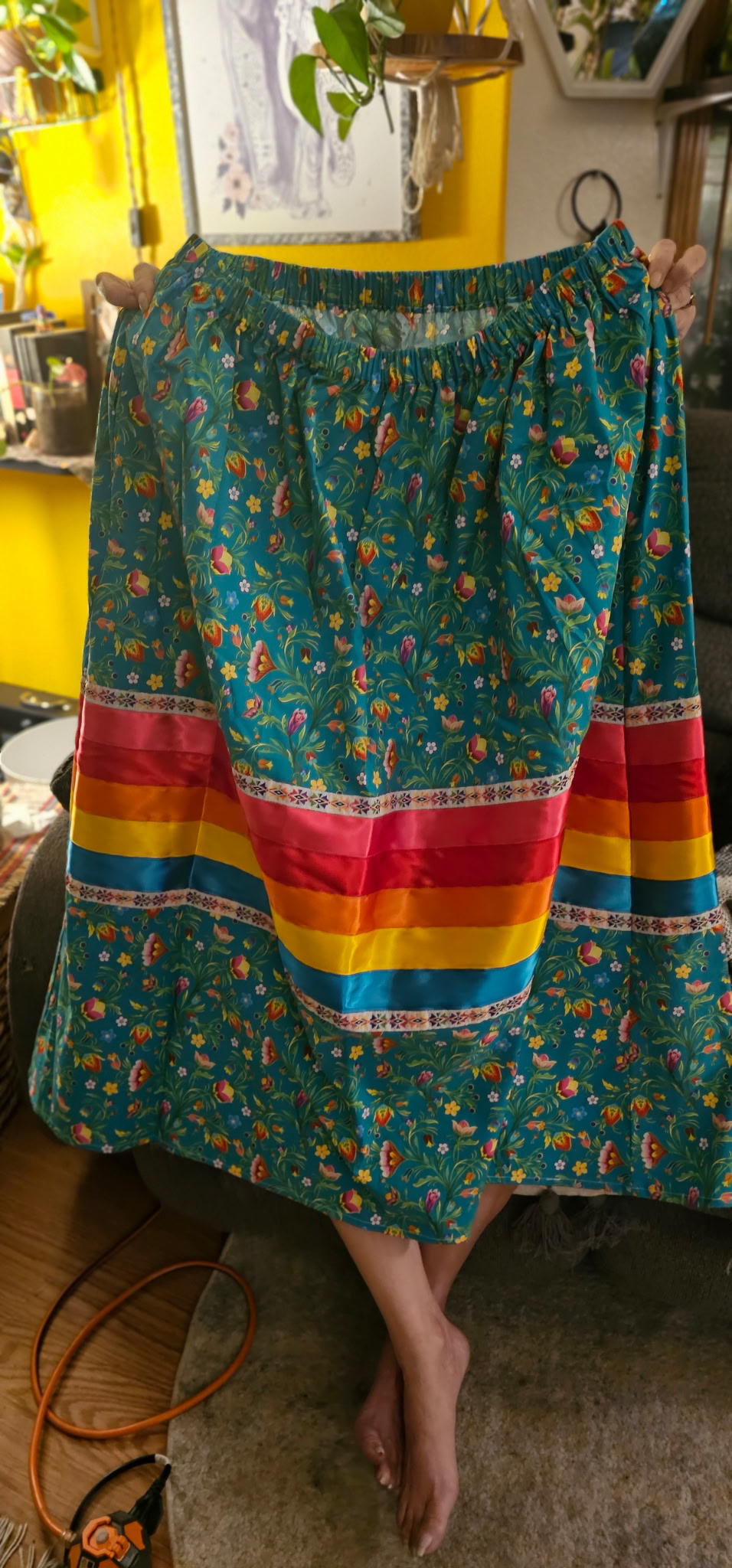
“You can watch or participate directly, dancing for four days around a sacred tree without food or water,” she said. “The tree is your umbilical cord to the spirit world.”
Men typically pierce their chests in the ceremony, but Steier hopes to make a traditional flesh offering and take it to that next level. “It’s putting you on the thin line between life and death, and trying to get a vision of where you’re supposed to be, your purpose,” she explains.
Reclaiming her heritage has been essential for Steier, especially because it was something her family once hid.
“My mom didn’t think those things were okay. I had to find it on my own.” She is now helping both her mother and her children enroll in the Pine Ridge Reservation community.
“We won’t have traditional turkey and all that,” she says. “My husband helps cook Native dishes, and we’ll reflect on our gratitude for our culture, our community, and the fact that we’re still here.”

