Many of us can still remember the very first time we were introduced to the world of gaming, that magical moment when we picked up a controller, pressed “Start,” and suddenly found ourselves somewhere entirely new. For some, it might’ve been sitting cross-legged on the carpet in front of a chunky CRT, the glow of the screen reflecting off wide, curious eyes. For others, it was at a friend’s house, watching in awe as characters we’d only imagined in our heads came to life in full color and motion.
That first experience was more than just a game; it was an invitation into a new kind of storytelling, a world where we could actually be the hero, solve the puzzle, or save the day. The sounds, the music, the button clicks, even the occasional frustration of a “Game Over” screen, all of it became part of a memory that would stay with us for years to come.
There was something special about that era, too. The simplicity of turning on the console, blowing into a cartridge to make it work, and hearing that familiar startup chime felt like a ritual. Those early gaming moments weren’t just about entertainment; they were about discovery, imagination, and connection. Whether we were exploring pixelated forests, racing through futuristic cities, or battling epic bosses, it was our first taste of worlds that seemed endless.
And even today, no matter how advanced games have become, with stunning graphics, open worlds, and online play, nothing quite compares to that first spark of wonder we felt as kids. That feeling of being transported, of losing track of time, of realizing that a simple controller could open the door to entire universes.
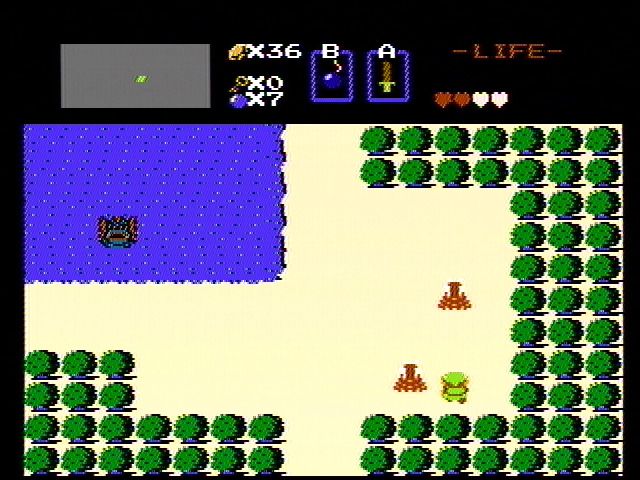
For many of us, that was the moment we fell in love, not just with gaming, but with the idea that technology and imagination could work together to create something truly magical.
Today, those old games matter more than ever because they remind us of what makes gaming powerful in the first place. Long before massive budgets, cinematic cutscenes, or endless online features, games had to rely on pure creativity. Developers had tiny amounts of memory to work with, so every pixel, every sound, and every mechanic had to count. That limitation forced innovation, and a lot of the ideas we take for granted today were born during that era.
Modern gaming still stands on the foundation those early titles created. The health bars, boss battles, inventory systems, platforming mechanics, and save points: all of these came from those 8-bit pioneers. Even today’s biggest franchises owe part of their design to the rules and rhythms of that earlier generation. When players jump into a new game and instantly know how it works, that familiarity exists because old games built the language of gaming itself.
But their importance goes deeper than game design. Retro games continue to matter because they offer something modern games sometimes lose: clarity. There’s no long tutorial, no massive map filled with icons, no pressure to grind or unlock content. You just pick up a controller and play. That simplicity makes them timeless, approachable, and, in a weird way, peaceful. They give us a break from the overwhelming complexity of the world today.
And even though technology has evolved, the feelings those old games create haven’t changed. They still challenge us. They still reward practice. They still make us think in creative ways. And they still prove that a game doesn’t need ultra-realistic graphics to be memorable, it just needs good ideas, strong gameplay, and a lot of heart.
Another reason old games continue to matter today is the way they’ve shaped the entire indie game scene. Many modern developers grew up during the 8-bit and 16-bit eras, and those early experiences still guide their creativity. Instead of chasing photorealistic graphics, indie studios often go back to the basics: tight controls, clever mechanics, and strong art direction. Games like Celeste, Stardew Valley, Shovel Knight, and Undertale don’t look like AAA blockbusters, yet they’ve become some of the most beloved titles of the last decade, all because they lean into the philosophy of retro gaming.

These developers aren’t using pixel art because they have to. They’re using it because it communicates emotion and personality in a way that feels authentic. It taps into a style of storytelling that leaves room for imagination, just like the classics did. When players see a pixelated character, their mind fills in the details; when they hear a simple chiptune melody, it connects instantly with that childhood sense of wonder. Retro-inspired games prove that limited visuals don’t limit impact. If anything, they enhance it.
Old games also serve as blueprints. They teach modern creators how to build rewarding difficulty curves, how to design levels that teach players without tutorials, and how to craft memorable characters with very little dialogue. Even today, developers study games like Super Mario Bros., Mega Man, The Legend of Zelda, and Metroid because those titles perfected core concepts that still define game design.
And in a world where gaming is dominated by sprawling open worlds and massive budgets, the spirit of those early games has become a kind of creative rebellion. They remind developers and players that innovation doesn’t always come from scale. Sometimes, the most powerful ideas come from simplicity, focus, and imagination.

