In the halls of a hospital built like a classroom, a high school student is performing her first blood pressure test. Down the road, a teenager in a hard hat works with blueprints before cutting timber with seasoned contractors. Down the hallway, there is a computer classroom where another student thwarts a simulated cyberattack.
These are the unique scenes from a college campus considered an adult training center. They’re happening every day at the Thompson Career Campus (TCC), where students are launching careers before they even walk across a graduation stage.
Education in Northern Colorado isn’t what it used to be. It’s better.
ASCENT, concurrent enrollment programs, and TCC career-technical programs enable high school students to earn college credits, build professional networks, and step into industries with purpose.
The education model in Northern Colorado is no longer about rote learning and textbook exams. It’s about exploration, opportunity, and early achievement.
The Fifth Year: Inside ASCENT
Imagine getting a year of college for free. That’s the promise of ASCENT (Accelerating Students through Concurrent Enrollment—a Colorado initiative that allows qualifying students to attend college full-time during a fifth year of high school with tuition fully covered.
It’s a game-changer for students like Patrick O’Brien. Now attending Front Range Community College (FRCC) through ASCENT, O’Brien said the program let him pursue advanced learning without the crushing weight of tuition. “It’s saving me money,” O’Brien explained. “It’s giving me a head start on my life.”
To qualify for ASCENT, students must complete at least nine college credit hours before finishing their senior year. They remain technically enrolled in their high school district, but their entire schedule is now college coursework.
“It’s like training wheels for college,” an undisclosed ASCENT student said. “Except the bike is already moving.”

Start Early, Stay Ahead: The Power of Dual and Concurrent Enrollment
For many students, their career rises even earlier. Concurrent enrollment programs allow high schoolers to take college-level courses for both high school and college credit. They are taught by certified instructors right in their high schools or on college campuses.
“When students see themselves succeeding in a college course while still in high school, it shifts their mindset,” said Kristen Besanceney, concurrent enrollment coordinator for Poudre School District (PSD). “They go from thinking ‘maybe college isn’t for me’ to saying ‘I can do this.’”
Kristen works tirelessly to make sure students from all backgrounds can access these opportunities. “We have to eliminate barriers,” she said. “Not just financial ones, but cultural ones, linguistic ones, and the mental barriers that say college isn’t for everyone.”
In PSD alone, students have access to over 100 concurrent enrollment courses through partners like FRCC, Aims Community College, and Colorado State University (CSU). These include courses in STEM, humanities, the arts, and career-specific fields like veterinary science and law enforcement.
Kristen added, “We’re not just giving them a course. We’re giving them belief.”
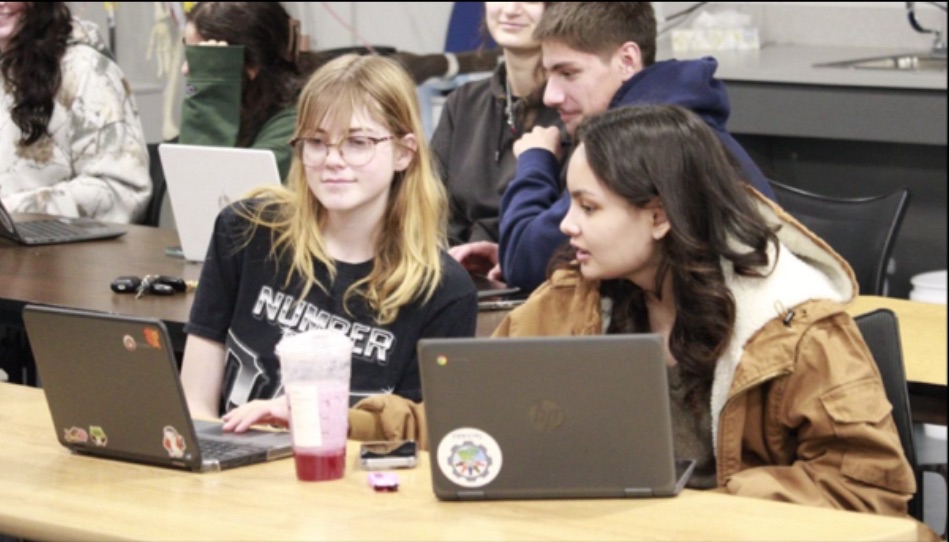
UNC + FRCC: A Growing Dual Enrollment Alliance
The University of Northern Colorado (UNC) is also emerging as a key player in Northern Colorado’s dual enrollment landscape. In collaboration with Front Range Community College, UNC is now offering transferable college-level courses that align with four-year degree plans.
UNC counselor Lorenzo Schillan was happy with the partnership.
“The power of this partnership is that it provides structure and clarity,” Lorenzo said. “Students aren’t just earning general credits, they’re earning credits that map directly to a degree at a respected four-year institution.”
Lorenzo said that pathways are being developed in areas like education, business, and the social sciences, allowing students to complete much of their freshman year coursework while still in high school.
The partnership emphasizes seamless transitions, coordinated advising, and intentional credit articulation.
“We’re not just plugging students into college classes and hoping it works out,” he said. “We’re walking alongside them—making sure what they take now matters later.”
The UNC/FRCC partnership also prioritizes underserved communities, offering extra support for first-generation and low-income students. Lorenzo believes that early exposure to university-level expectations is a key to improving long-term college retention and success.
The Thompson Career Campus: A School That Looks Like the Future
Pull off Highway 287 in Loveland and you might miss it. But inside TCC, students are mastering the kinds of skills you usually see in trade schools, hospitals, or IT departments.
The Thompson Career Campus is one of the crown jewels of Thompson School District’s commitment to Career and Technical Education (CTE). Here, high school juniors and seniors can enroll in full-fledged career pathways such as Health Science, Construction Trades, Business, Education, and Cybersecurity.
“We wanted to build a place that gave students permission to dream big and train even bigger,” said Allison Bryson, TCC Counselor and CTE Specialist. “This isn’t about Plan B careers. These are Plan A futures.”
The programs are rigorous.
In Health Sciences, students can earn their Certified Nursing Assistant (CNA) credentials and complete clinical rotations at local care facilities. In Cybersecurity, they run live simulations to detect breaches and patch vulnerabilities. In Construction, students are out building real sheds and framing houses.
Each program is guided by local industry needs. “We don’t guess what employers want,” Allison said. “We ask them. And then we build our classes around it.”
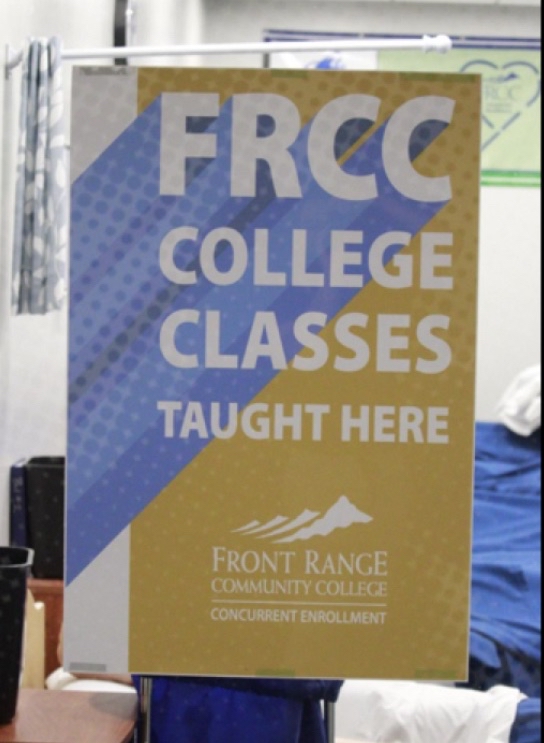
Learning On the Job: The Work-Based Learning Revolution
The classroom isn’t the only place where learning happens. TCC’s robust Work-Based Learning program connects students with internships, job shadows, apprenticeships, and mentoring opportunities.
“Some of our students walk into jobs right after graduation because their internship turned into a job offer,” said Miranda Kantor, TCC’s Work-Based Learning Coordinator. “It’s not just a resume builder. It’s a door opener.”
TCC has partnered with dozens of local employers ranging from UCHealth to small construction firms to cybersecurity startups. These partnerships create authentic, hands-on experiences that build student confidence and industry fluency.
“I was nervous to go into a clinic at first,” said Jayla, a senior CNA student. “Now I walk in and I know what I’m doing. That’s a crazy good feeling.”
From Classroom to Boardroom: The Business Community Connection
Overseeing the district’s ties to the business world is Susan Scott, Business Community Coordinator for TSD. Her role is matchmaking: connecting students who want to work with professionals who want to mentor.
“It’s really about bringing relevance into the classroom,” Susan explained. “When students know that what they’re learning leads to something real, they work harder. They care more.”
Susan regularly coordinates career fairs, speaker panels, resume workshops, and networking events. Her goal? Bridge the gap between the classroom and the conference room.
Beyond the District: Statewide Innovation with Local Flavor
Programs like ASCENT and TCC are part of a larger statewide push to modernize education. Colorado’s Launch: Equitable & Accelerated Pathways for All initiative and Career Advance Colorado are expanding free credentialing opportunities in high-demand fields.
The state sees these programs as essential for building a competitive workforce.
At the same time, local leaders like Kyla Anthony, Director of the CSU/FRCC Dual Enrollment Partnership, ensure these programs scale effectively.
“What we’re doing is creating seamless, supported transitions,” Kyla said. “We want students to move from high school to college to career without feeling like they have to start over each time.”
Kyla helps align course offerings, advising systems, and credit transfer protocols between FRCC and CSU. This ensures that a student can take English 121 in high school and have it count all the way through to their bachelor’s degree.
Real Students, Real Change
Jordan, a Health Sciences student, is already working in the medical field. “I’m helping patients, learning real care skills, and getting paid while I do it. That’s not just a class. That’s a career starting.”
Adrian, a PSD student, never imagined he’d go to college. After passing two concurrent enrollment courses, he’s now applying to CSU. “I can actually do this,” he said.
Students aren’t just gaining knowledge. They’re gaining momentum.
Conclusion: The New Face of Education
What’s happening in Northern Colorado isn’t just innovation. It’s transformation. It’s an answer to the question that so many high school graduates have: What now?
With ASCENT, dual enrollment, CTE pathways, and work-based learning, students don’t have to wait to figure out their future. They’re already living it.
And with educators, business leaders, and visionary coordinators like Kristen Besanceney, Lorenzo Schillan, and Kyla Anthony leading the charge, the future isn’t just something students walk into.
It’s something they build.

